Thank you! Your submission has been received!
Oops! Something went wrong while submitting the form


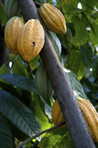
 Chocolate manufacturer, Les Chocolateries Askanya, is seeking to expand its production capacity to meet growing demand for its product. The company currently supports Haitian Cacao producers and has a manufacturing capacity of 4,200 bars per month. The company has experienced a lot of success and serves the US and local market, supplying three flavors of bar in three sizes.
The company currently has a 1000 sq. ft. manufacturing facility, located in Ouanaminthe, North-East Haiti. They also have storage and distribution facilities in both Port-au-Prince and New York. The aim of the expansion is to increase annual capacity to process 12 tons of cacao, produce 225,000 bars and achieve revenues of US$800,000 per annum.
The expansion project will take three to six months to be completed and will require an investment of US$100,000. The investment is primarily aimed at sourcing new equipment, including generators, melangeurs, a tempering, roasting, grinding and pre-cracking machines and ancillary equipment and coolers. Some funds will also be directed toward packaging, branding, training and recruitment. The company has a preference for an investment in the form of a grant or low-interest loan.

 Haiti is currently undergoing a period of redevelopment which is creating lucrative opportunities for investment. Its strategic location, large workforce of young adults, pro-business government and support from the international community have positioned the country for future growth and development.
 Thank you! Your submission has been received!
Oops! Something went wrong while submitting the form
Indicators for Labour Costs
1 - World Bank Doing Business
2 - EY Worldwide Personal Tax Guide 2014/15
Indicators for Utility Costs
1 - Climatescope
2 - Corporacion del acueducto y Acantarillado de Santo Domingo
3 - International Telecommunication Union - ITU
Indicators for Property Costs
1 - Cushman and Wakefield
2 - Cushman and Wakefield
3 - RLB - Rider Levett Bucknall (Caribbean Report)
4 - RLB - Rider Levett Bucknall (Caribbean Report)
Indicators for Taxes
1 - The Heritage Foundation
Indicators for Exports
1 - World Development Indicators
Indicators for Size of Industry
1 - fDi Intelligence from the Financial Times based on World Development Indicators
2 - World Development Indicators
Indicators for Natural Resources
1 - World Development Indicators
Indicators for Track Record
1 - fDi Intelligence from the Financial Times

Centre for Facilitation of Investments
116 Av. Jean Paul II,
Turgeau,
Port-au-Prince,
P: +(509) 2811-7234






All investment project information has been obtained from publicly available sources.









.png)